
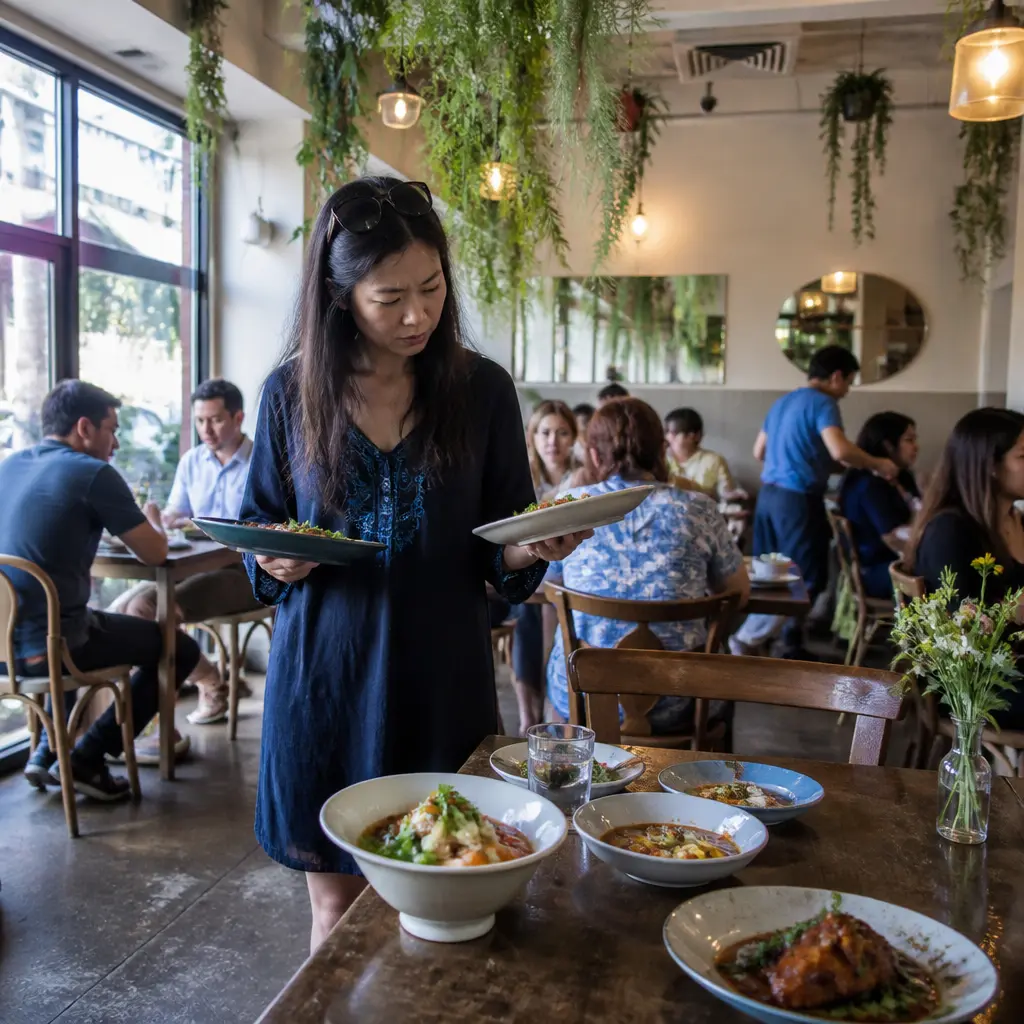
Casual gourmet is everyday restaurant dining elevated by serious cooking, dependable hospitality, thoughtful sourcing, and prices that remain proportionate to the experience. What separates true casual gourmet from an overhyped trendy eatery is not the presence of expensive ingredients, minimalist interiors, or social-media visibility, but repeatable value: the food tastes intentional, the menu reflects operational competence, and the restaurant earns loyalty after the novelty fades. This distinction matters in a large and pressured marketplace: the National Restaurant Association has described the U.S. restaurant industry as a roughly $1 trillion annual business employing millions of people, while the U.S. Bureau of Labor Statistics continues to show that food consumed away from home represents a significant share of household spending. In that environment, diners need practical standards for judging authenticity, sustainability, service, and price rather than relying on hype alone.
Defines Casual Gourmet Culinary Integrity
Casual gourmet culinary integrity is the alignment between what a restaurant promises and what it consistently delivers. The pairing combines “casual gourmet,” a restaurant format that offers elevated food without the formality or pricing structure of fine dining, with “culinary integrity,” the disciplined use of sound ingredients, appropriate technique, transparent sourcing, and honest presentation. The term is not a formal regulatory category. Instead, it is a useful evaluative standard grounded in restaurant operations and the broader hospitality principle that guest expectations should be met consistently.
True casual gourmet generally has several connected hyponyms: ingredient-led cooking, accessible chef-driven dining, modern neighborhood restaurants, high-quality counter service, refined fast casual, and regional craft cooking. These formats can look very different, from a chef-owned bistro to a carefully designed sandwich shop, but they share an emphasis on substance over theatrical positioning.
Ingredient Integrity
Ingredient integrity means that the quality, origin, seasonality, and condition of a principal ingredient are treated as part of the dish rather than as decorative marketing. A restaurant does not need to use rare products to demonstrate integrity. A well-sourced local tomato, properly handled chicken, fresh-ground grain, or responsibly caught fish can matter more than imported luxury ingredients used without care.
The strongest evidence is sensory and operational: vegetables taste like themselves, proteins are cooked accurately, bread has a discernible fermentation or baking character, and sauces support rather than conceal the central ingredient. The U.S. Department of Agriculture’s food-loss research also gives this issue practical importance. The agency has estimated that a substantial share of the U.S. food supply is lost at the retail and consumer levels, so careful purchasing, storage, and preparation are not merely ethical claims; they are indicators of professional kitchen management.
Technique Without Theater
Technique without theater is the use of culinary skill to improve flavor, texture, safety, and consistency rather than to create a spectacle for its own sake. Fermentation, live-fire cooking, house-made pasta, pickling, curing, and pastry work can all support casual gourmet quality when they produce a clear benefit on the plate.
The distinction becomes visible when diners ask whether a technique is necessary, repeatable, and well executed. Smoke should contribute balance rather than overwhelm food; foam should add texture rather than function as a visual accessory; and a tasting menu should have progression rather than simply a sequence of small portions. The culinary education and professional standards promoted by organizations such as the Culinary Institute of America emphasize fundamentals, mise en place, sanitation, and consistency—qualities that are less photogenic than novelty but more important to the dining experience.
Accessible Value
Accessible value means that the diner receives a coherent relationship among price, portion, quality, service, and atmosphere. It does not require the lowest possible bill. A casual gourmet restaurant may charge more than a conventional fast-food outlet because skilled labor, better ingredients, and slower preparation cost more. However, the price should be explainable through the experience rather than inflated by scarcity language or design-driven prestige.
This standard is especially relevant during periods of food and labor inflation. Bureau of Labor Statistics consumer expenditure data consistently show that restaurant meals compete with groceries, transportation, and housing for household budgets. A restaurant that offers a satisfying meal at a transparent price can therefore create durable value even when it is not cheap. A restaurant that relies on a fashionable address, tiny portions, and automatic surcharges risks converting a one-time curiosity into a negative review.
Tests Casual Gourmet Culinary Integrity Through Consistency
Consistency is the bridge between a promising concept and a trustworthy restaurant. One excellent opening-night dish proves potential; repeated quality across different days, shifts, and menu items proves a system. Casual gourmet restaurants need enough structure to reproduce their standards while retaining enough flexibility to respond to seasonality and supply.
Menu Coherence
Menu coherence is the degree to which a restaurant’s dishes belong to a recognizable culinary point of view. A coherent menu may focus on a region, cooking method, ingredient family, or service format. It does not need to be short, but every additional item increases purchasing complexity, preparation demands, training requirements, and the risk of uneven execution.
Overhyped eateries often confuse abundance with generosity. They combine unrelated global references, list numerous premium ingredients, and use descriptive language that makes ordinary dishes sound exceptional. By contrast, a coherent menu allows diners to understand why dishes sit beside one another and gives the kitchen a realistic chance to execute them well.
Repeatable Execution
Repeatable execution is the capacity to deliver the same intended flavor, temperature, texture, and portion standard across visits. It depends on recipes, training, supplier relationships, equipment, prep systems, and communication between the kitchen and dining room. Hospitality research frequently treats consistency as a central driver of satisfaction because guests evaluate not only a restaurant’s best performance but also the reliability of the average visit.
A useful informal test is to visit at different times: a busy Friday evening, a quiet weekday lunch, and a later service period. If the restaurant remains organized, food temperatures hold, and staff can explain substitutions honestly, it is demonstrating operational maturity. If quality collapses whenever the room fills, the concept may be more ambitious than its systems allow.
Transparent Hospitality
Transparent hospitality means that staff communicate accurately about ingredients, preparation time, dietary limitations, fees, and availability. It does not require scripted enthusiasm or formal table service. A friendly counter employee who explains a daily special clearly can provide more meaningful hospitality than a highly stylized dining room where basic questions receive vague answers.
The practice also includes responsible handling of allergies and dietary requests. The Food and Drug Administration identifies major food allergens and provides guidance for food businesses, but responsibility remains shared among operators, employees, and guests. A restaurant that treats allergen questions as an inconvenience undermines its claim to care, regardless of how sophisticated its menu appears.
Distinguishes Casual Gourmet Culinary Integrity From Trend Signals
Trend signals are not inherently deceptive. Open kitchens, natural wine, fermented condiments, regional flour, chef collaborations, and dramatic plating can all be part of a legitimate restaurant. The problem arises when a signal substitutes for performance. A trend becomes hype when it attracts attention without improving flavor, service, durability, or community value.
Social-Media Visibility
Social-media visibility is a distribution tool, not proof of culinary quality. Highly visual dishes can generate rapid awareness, while quieter strengths such as seasoning, pacing, and staff training are harder to photograph. Restaurant discovery has increasingly moved through digital platforms, and review volume can influence demand, but popularity and integrity remain separate variables.
Diners should compare promotional imagery with independent descriptions of flavor and service. Repeated comments about cold food, rushed pacing, hidden fees, or disappointing portions are more informative than a single viral image. Likewise, a restaurant with limited online visibility may be excellent if local customers return frequently and the kitchen maintains standards.
Luxury Ingredient Signaling
Luxury ingredient signaling uses words such as truffle, wagyu, caviar, heritage, artisanal, or sustainable to communicate status. These terms can be meaningful, but they require context. “Wagyu,” for example, describes particular cattle genetics and production systems, not an automatic guarantee of better cooking. “Sustainable” can refer to different environmental, labor, or traceability criteria and should not be accepted as a complete explanation by itself.
The true casual gourmet question is simple: does the ingredient improve the dish enough to justify its cost and environmental burden? A modest ingredient prepared with precision can offer greater value than a prestigious ingredient used to disguise weak seasoning or poor sourcing.
Interior and Experience Design
Interior design contributes to atmosphere, but it should support rather than overwhelm the meal. Comfortable acoustics, useful lighting, clean facilities, sensible seating, and an efficient service flow affect satisfaction more directly than expensive decorative objects. The National Restaurant Association’s industry reporting repeatedly identifies experience, convenience, and value as important considerations in restaurant demand, demonstrating that the dining room is part of the product but not the whole product.
A useful comparison is to treat the restaurant as a three-part system: the kitchen creates the food, the service team interprets the promise, and the environment frames the encounter. If one element is dramatically stronger than the others, the experience can feel unbalanced. A beautiful room cannot rescue under-seasoned food, just as excellent cooking can be weakened by disorderly service.
Measures Casual Gourmet Culinary Integrity Through Evidence
Diners, critics, and restaurant owners can evaluate casual gourmet quality through a practical evidence framework rather than a single score. The framework should consider flavor, consistency, value, sourcing, service, and resilience. A restaurant does not need to maximize every category, but it should perform credibly across the categories that define its promise.
The Five-Visit Test
The five-visit test measures whether quality survives different conditions. A sensible sequence includes one signature dish, one ordinary staple, one vegetable or side, one off-peak visit, and one visit involving a substitution or dietary question. This is not a scientific experiment, but it exposes whether the restaurant’s reputation rests on a single photogenic item.
After each visit, diners can record price before and after fees, portion satisfaction, wait time, temperature, seasoning, staff accuracy, and whether the meal matched its description. A simple chart with visits on the horizontal axis and categories on the vertical axis can make patterns visible. Stable results indicate a dependable operation; dramatic swings suggest that hype may exceed capacity.
The Promise-to-Plate Test
The promise-to-plate test compares marketing language with the actual dish. If a menu emphasizes local produce, diners should notice freshness and seasonality. If it highlights open-fire cooking, the smoke and charring should be controlled and purposeful. If it claims fast service, the kitchen should deliver within a reasonable and clearly communicated time.
This test also rewards honest modesty. A restaurant that calls a dish a cheeseburger, stew, noodle bowl, or roast chicken does not need extravagant storytelling if the food is delicious and carefully made. Plain language can be a sign that the operator trusts the product.
The Community Durability Test
Community durability measures whether a restaurant creates value beyond opening-month attention. Indicators include repeat local customers, stable staffing, partnerships with nearby producers, responsible waste practices, accessible ordering options, and a menu that can evolve without abandoning its identity.
This perspective matters because restaurant turnover is high and operating margins are often narrow. The National Restaurant Association has reported persistent challenges involving food costs, labor costs, recruitment, and profitability. A restaurant that survives by building trust, controlling waste, training employees, and serving its neighborhood may be more impressive than one that produces a short-lived burst of online excitement.
Applies Casual Gourmet Culinary Integrity to Real-World Dining
The distinction can be applied across several restaurant models. A refined fast-casual bakery may demonstrate integrity through naturally leavened bread, disciplined fermentation, transparent ingredient labeling, and efficient service. A neighborhood bistro may demonstrate it through a short seasonal menu, properly made stocks and sauces, fair pricing, and staff who understand the food. A chef-led food stall may demonstrate it through one excellent specialty prepared consistently rather than through an oversized menu.
By contrast, an overhyped trendy eatery often displays a mismatch between concept and execution: premium language attached to commodity ingredients, elaborate plating masking weak flavor, prices that are disconnected from portion and satisfaction, or a service model that treats guests as content producers. These weaknesses do not mean every fashionable restaurant is poor. They mean fashion should be treated as an invitation to investigate, not as evidence of quality.
Conclusion: Casual Gourmet Culinary Integrity Rewards Substance
True casual gourmet is defined by culinary integrity, not by informality alone or by a fashionable aesthetic. Ingredient integrity shows that sourcing and handling support flavor. Technique without theater demonstrates that skill serves the dish. Accessible value connects price to genuine quality. Menu coherence, repeatable execution, and transparent hospitality turn a compelling idea into a reliable restaurant. Social-media visibility, luxury ingredients, and interior design can enhance a good operation, but they cannot replace one.
For diners, the practical response is to look beyond opening buzz, examine the promise-to-plate relationship, revisit restaurants under different conditions, and reward businesses that deliver honest value. For restaurant operators, the broader lesson is equally important: long-term reputation is built through systems, staff development, responsible sourcing, and thousands of ordinary interactions. In a competitive industry measured in trillions of dollars of consumer spending and millions of customer visits, substance remains the most durable trend.
Sources: National Restaurant Association, 2024 State of the Restaurant Industry Report, https://restaurant.org/research-and-media/research/research-reports/state-of-the-restaurant-industry/; U.S. Bureau of Labor Statistics, Consumer Expenditure Surveys, https://www.bls.gov/cex/; U.S. Department of Agriculture, Food Loss and Waste, https://www.usda.gov/foodlossandwaste; U.S. Food and Drug Administration, Food Allergies, https://www.fda.gov/food/consumers/food-allergies; Culinary Institute of America, Professional Culinary Arts, https://www.ciachef.edu/