
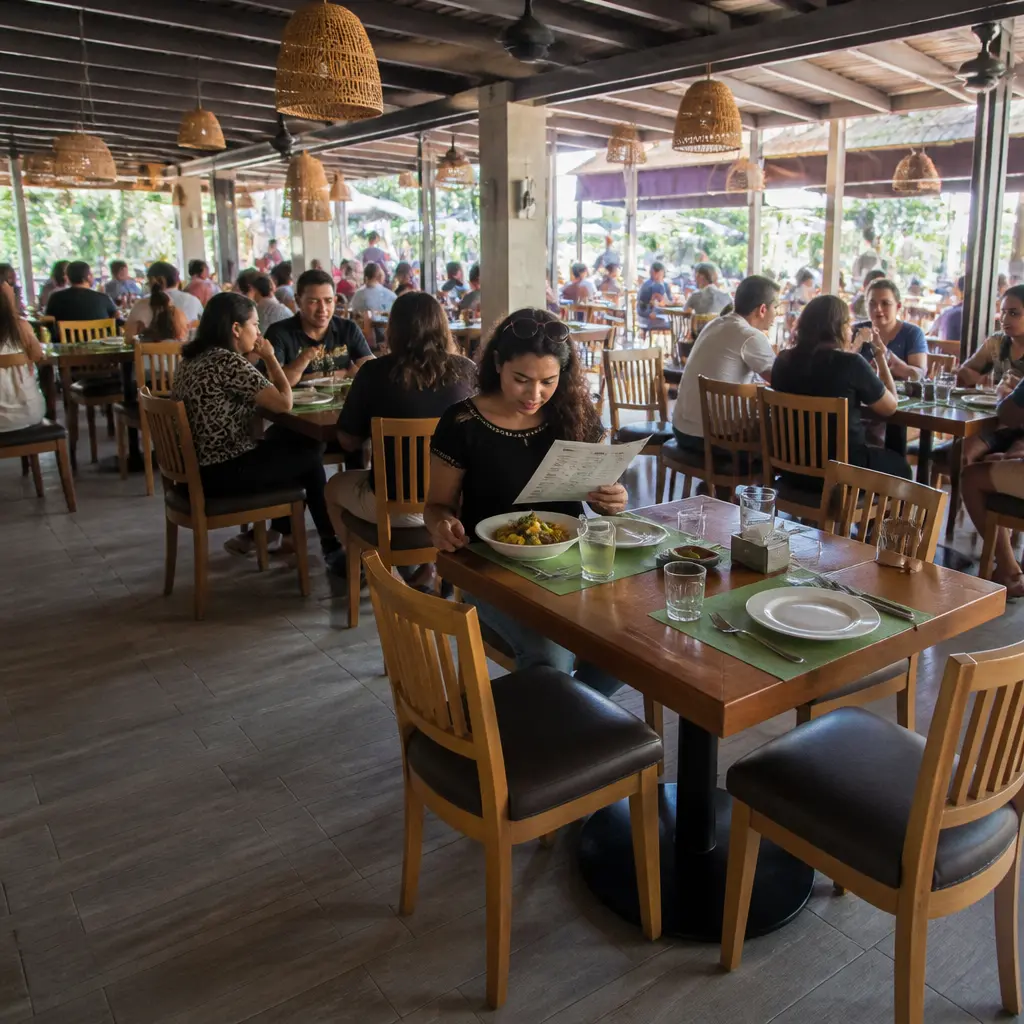
Restaurant menu promise accuracy is the degree to which a menu’s wording, photographs, prices, portions, ingredients, and service claims match the meal a guest actually receives. Overpromising menus create disappointing restaurant nights because they widen the gap between expectation and experience: a “house-made” dish may taste industrial, a “jumbo” entrée may arrive undersized, or an attractive photograph may depict a portion and garnish that the kitchen does not routinely serve. This expectation gap matters in an industry projected by the National Restaurant Association to exceed $1 trillion in annual sales and employ roughly 15.7 million people in 2024. The discussion below examines how menus function as promises, the main forms of overstatement, the psychological and financial effects of expectation failure, and practical methods restaurants can use to make menu language more credible.
Restaurant Menus—Promise Accuracy as a Measure of Guest Trust
Restaurant menu promise accuracy can be defined as the consistency between a menu representation and the product, price, portion, preparation, availability, and service conditions delivered to the customer. This pairing combines the restaurant menu, the primary pre-purchase information source, with promise accuracy, a form of claim reliability. The Federal Trade Commission defines deceptive advertising broadly as a representation, omission, or practice likely to mislead a reasonable consumer when it is material to a purchasing decision. In restaurant settings, the relevant promise may be explicit, such as “8-ounce steak,” or implied, such as a photograph showing a heavily garnished and generously filled plate.
The pairing includes several related hyponyms: descriptive accuracy, visual accuracy, price accuracy, portion accuracy, ingredient accuracy, availability accuracy, and experiential accuracy. These categories overlap, but each can produce a different form of disappointment. A meal can be correctly priced yet inaccurately described, or accurately described yet visually presented in a way that makes the serving appear much smaller than expected.
Descriptive Menu Accuracy
Descriptive menu accuracy means that adjectives, origin claims, preparation terms, and ingredient statements reflect the dish actually served. Words such as “artisan,” “handcrafted,” “fresh,” “local,” “homemade,” “smoked,” “organic,” and “grass-fed” carry different expectations even when customers do not know their formal legal definitions. The more specific the wording, the more precisely the kitchen must deliver. “Roasted seasonal vegetables” gives a broad expectation, while “charred local asparagus with lemon gremolata” makes several verifiable claims about the ingredient, cooking method, and accompaniment.
The danger is not merely poetic exaggeration. The Food and Drug Administration recognizes nine major food allergens in the United States, including sesame, which became the ninth major allergen under the FASTER Act in 2023. Inaccurate ingredient language can therefore create health risks as well as dissatisfaction. A restaurant that lists a dish as containing no dairy, nuts, or gluten must have controls that support that statement rather than treating it as casual marketing language.
Visual and Portion Accuracy
Visual and portion accuracy describe whether photographs, illustrations, plate descriptions, and size terms prepare guests for the appearance and quantity they receive. Food photography is often stylized with special lighting, replacement ingredients, added garnishes, or compositional techniques that make a dish look more abundant. That image may be effective advertising, but it becomes an overpromise when the actual plate is consistently smaller, less colorful, or missing prominent elements.
Portion terms such as “tower,” “feast,” “sampler,” “family-style,” “double,” and “jumbo” operate as informal measurements. They are not always standardized, yet they strongly influence perceived value. The National Restaurant Association reports that food and nonalcohol beverage sales are central to restaurant revenue, while labor, food, occupancy, and operating costs continue to pressure margins. That financial pressure may encourage smaller portions or simplified garnishes, but quietly reducing the delivered experience while retaining expansive menu language transfers the cost of margin management to customer trust.
Price, Availability, and Substitution Accuracy
Price accuracy means that the displayed price, mandatory fees, modifiers, taxes where applicable, and portion conditions are understandable before ordering. Availability accuracy means that a signature dish, advertised special, or promised ingredient is actually available when the guest chooses the restaurant. Substitution accuracy concerns whether a replacement is disclosed and whether the replacement preserves the value and identity of the dish.
Unexpected substitutions are especially damaging when they affect premium ingredients. A menu promising crab, short rib, truffle, or a named regional product establishes a value expectation that cannot be preserved by silently replacing it with a less expensive alternative. The Federal Trade Commission’s advertising principles make material omissions important: a missing disclosure can be misleading even when every printed sentence is technically true.
Why Overpromising Menus Produce Disappointing Restaurant Nights
A restaurant night is judged as a sequence rather than a single bite. Guests invest time in travel, reservations, parking, childcare, social planning, and money before the first course arrives. The menu therefore creates an anticipated experience that includes flavor, atmosphere, abundance, hospitality, and value. When the delivered meal falls below that anticipated standard, the guest evaluates the entire evening through the disappointment.
Expectation-Disconfirmation and the Value Gap
Expectation-disconfirmation theory, associated with consumer researcher Richard Oliver, explains satisfaction as a comparison between prior expectations and perceived performance. Positive disconfirmation occurs when performance exceeds expectations; negative disconfirmation occurs when it falls short. An extravagant menu can increase satisfaction only if the kitchen and service operation can repeatedly meet the elevated standard. Otherwise, vivid language produces a larger negative gap than restrained language would have created.
The value gap is the difference between what customers believe they are buying and what they believe they received. It includes more than portion size. A $24 “signature” dish may feel fair if it delivers distinctive ingredients, careful technique, and a memorable presentation. The same price may feel excessive when the dish resembles a generic product described with premium vocabulary.
Sensory Contrast Between Menu and Plate
Sensory contrast occurs when the menu creates expectations about taste, texture, temperature, aroma, or appearance that the plate does not satisfy. “Crispy” implies audible or textural crunch; “silky” implies smoothness; “fiery” implies substantial heat; “melt-in-your-mouth” implies tenderness. These are not decorative words to a diner making a choice. They are product specifications expressed in sensory language.
A useful way to illustrate this relationship is a simple expectation-performance chart with menu promise on the horizontal axis and delivered performance on the vertical axis. The strongest restaurant experiences sit on or above the diagonal line, where delivery matches or exceeds the promise. Disappointing experiences fall below that line. The farther a dish falls below the line, the more likely the guest is to describe the evening as misleading rather than merely imperfect.
The Social and Digital Amplification of Disappointment
Disappointment increasingly becomes public feedback. BrightLocal’s 2024 Local Consumer Review Survey found that 91% of consumers read online reviews of local businesses, and many consumers use reviews to compare options before visiting. A mismatch between menu promise and delivered meal can therefore influence not only the dissatisfied diner but also future guests who read a review describing the gap.
Social media intensifies the effect because menu photographs, customer photographs, and short videos can be compared instantly. A restaurant may use a professionally styled image to attract a booking, while guests publish ordinary service photographs that reveal a smaller portion or missing garnish. The resulting contrast can make a normal operational variation appear like deliberate deception.
Menu Overpromising Across Restaurant Categories
Overpromising does not look identical in every restaurant. The risky claims depend on the business model, price point, cuisine, and service format. A quick-service restaurant may create disappointment through a photograph that implies abundance, while a tasting-menu restaurant may overpromise through grand narratives about provenance and technique.
Casual Dining and Family Restaurants
Casual dining menus often rely on large photographs, stacked adjectives, combo descriptions, and value-oriented portion language. Claims such as “loaded,” “ultimate,” “feast,” or “all-you-can-eat” establish a high quantity expectation. Problems arise when promotional images show more toppings than the standard build, when a “family” portion serves fewer people than implied, or when a limited-time special is unavailable during the advertised period.
Fine Dining and Chef-Driven Restaurants
Fine dining establishments tend to overpromise through provenance, craft, rarity, and narrative. Terms such as “foraged,” “heritage,” “single-origin,” “dry-aged,” and “zero-waste” signal a philosophy as much as an ingredient. Guests may accept small portions when the menu communicates an intentional progression, but they are less tolerant when an elaborate description produces a technically ordinary dish or when an advertised tasting sequence changes without explanation.
Health, Sustainability, and Dietary Menus
Health and sustainability claims are particularly sensitive because diners may choose them for ethical, medical, or lifestyle reasons. “Plant-based” may be understood as vegan by some customers, while “vegetarian” does not necessarily mean dairy-free or egg-free. “Low-calorie” and “light” can also be interpreted differently unless supported by clear information. The FDA’s menu-labeling rule requires covered chain restaurants with 20 or more locations to provide calorie information and additional written nutrition information on request, demonstrating that food claims can require operational documentation rather than informal judgment.
Operational Causes Behind Restaurant Menu Overpromising
Menu overpromising is often caused by a separation between marketing decisions and kitchen reality. A copywriter may describe the ideal plate, a photographer may style a promotional version, and a purchasing manager may later substitute ingredients because of cost or supply problems. If the menu is not updated after those decisions, the customer receives a promise that no operating team can reliably fulfill.
Menu Engineering Without Promise Governance
Menu engineering traditionally evaluates popularity and contribution margin to decide which items to promote, reprice, redesign, or remove. That financial analysis is useful, but it should be paired with promise governance: a review of whether every high-visibility claim can be delivered consistently. A profitable dish that routinely arrives with unavailable ingredients, variable portions, or confusing modifiers may generate short-term sales while increasing refunds, complaints, and negative reviews.
Supply-Chain Volatility and Silent Substitution
Restaurants operate with perishable inventory and changing supplier conditions. Weather, transportation delays, commodity prices, and regional shortages can affect seafood, produce, meat, and specialty products. Supply volatility is not itself a service failure; silent substitution is. A clear server explanation, temporary menu insert, or digital update can preserve trust, while allowing an outdated premium description to remain in circulation makes an unavoidable substitution feel dishonest.
Training and Communication Breakdowns
Servers are often the final interpreters of menu promises. If staff cannot explain portion sizes, allergens, cooking methods, or unavailable ingredients, customers make assumptions that the restaurant may not be able to correct later. The National Restaurant Association has consistently identified labor and staffing conditions as major operating concerns, making concise menu training especially important. A short pre-shift briefing can prevent a large expectation failure when a signature dish changes.
How Restaurants Can Replace Overpromising With Credible Menus
The goal is not bland or cautious writing. Effective menus can be vivid while remaining operationally honest. The strongest approach treats every important phrase as a promise that should be tested against purchasing records, recipes, plating photographs, allergen controls, and actual customer feedback.
Audit Claims Against the Delivered Plate
Restaurants should conduct a menu-to-plate audit at regular intervals and whenever a recipe, supplier, price, or presentation changes. The audit should compare the written description, photograph, standard recipe, portion weight, garnish, modifier rules, and actual plate. It should also identify claims that are difficult to verify, such as “fresh,” “authentic,” or “homemade,” and replace them with more precise language where necessary.
- Record standard portion weights and photograph the normal service presentation.
- Mark ingredients that may be substituted and define the required customer disclosure.
- Review allergen and dietary statements with the kitchen and management team.
- Compare online ordering descriptions with printed menus and in-store boards.
- Remove discontinued specials and outdated promotional photographs immediately.
Use Specificity Instead of Superlatives
Specific descriptions are usually more credible than strings of superlatives. “Roasted chicken thigh with preserved lemon, chickpeas, and herb yogurt” gives a customer useful information about the dish. “The ultimate mouthwatering Mediterranean feast” communicates enthusiasm but little that can be evaluated. Specificity also helps staff answer questions and gives the kitchen a clearer standard for execution.
Design a Recovery Process for Broken Promises
Even accurate menus cannot eliminate every mistake. Restaurants should prepare a recovery process for missing ingredients, incorrect dishes, long delays, and substantial portion or quality problems. The process may include an immediate explanation, a replacement, a reasonable adjustment, or a manager check-in. Recovery works best when the restaurant acknowledges the expectation gap rather than arguing that the menu wording was technically defensible.
- Identify the mismatch quickly and listen without interrupting.
- Explain the practical cause without blaming suppliers, staff, or the customer.
- Offer a specific remedy that fits the seriousness of the problem.
- Record recurring mismatches for menu, recipe, or training correction.
Conclusion: Restaurant Menu Promise Accuracy Protects the Entire Dining Experience
Restaurant menus are not merely lists of food; they are commercial promises that shape expectations before service begins. The most important Restaurant Menus—Promise Accuracy categories include descriptive, visual, portion, price, availability, ingredient, and experiential accuracy. Overpromising widens the expectation-disconfirmation gap, makes value feel poor, increases the likelihood of complaints, and gives dissatisfied guests material to share publicly. The broader lesson is that persuasive menu writing must be connected to purchasing, recipes, plating, allergen controls, staff training, and digital publishing.
Restaurant operators should audit their highest-profile claims, replace vague superlatives with specific descriptions, update menus when supply conditions change, and measure complaints and reviews for repeated promise failures. Diners can also protect themselves by asking about portion sizes, substitutions, allergens, and availability when a menu claim is especially important. Further reading on advertising standards, FDA menu labeling, consumer expectation theory, and restaurant industry performance can help businesses turn attractive menus into reliable experiences rather than disappointing nights.
Sources: National Restaurant Association, 2024 State of the Restaurant Industry Report, https://restaurant.org/research-and-media/research/research-reports/state-of-the-restaurant-industry/; Federal Trade Commission, Advertising and Marketing Basics, https://www.ftc.gov/business-guidance/advertising-marketing/advertising-marketing-basics; U.S. Food and Drug Administration, Menu Labeling Requirements, https://www.fda.gov/food/food-labeling-nutrition/menu-labeling-requirements; U.S. Food and Drug Administration, Food Allergies, https://www.fda.gov/food/consumers/what-you-need-know-about-food-allergies; BrightLocal, 2024 Local Consumer Review Survey, https://www.brightlocal.com/research/local-consumer-review-survey/; Oliver, Richard L., “A Cognitive Model of the Antecedents and Consequences of Satisfaction Decisions,” Journal of Marketing Research, 1980, https://doi.org/10.2307/3150499.