
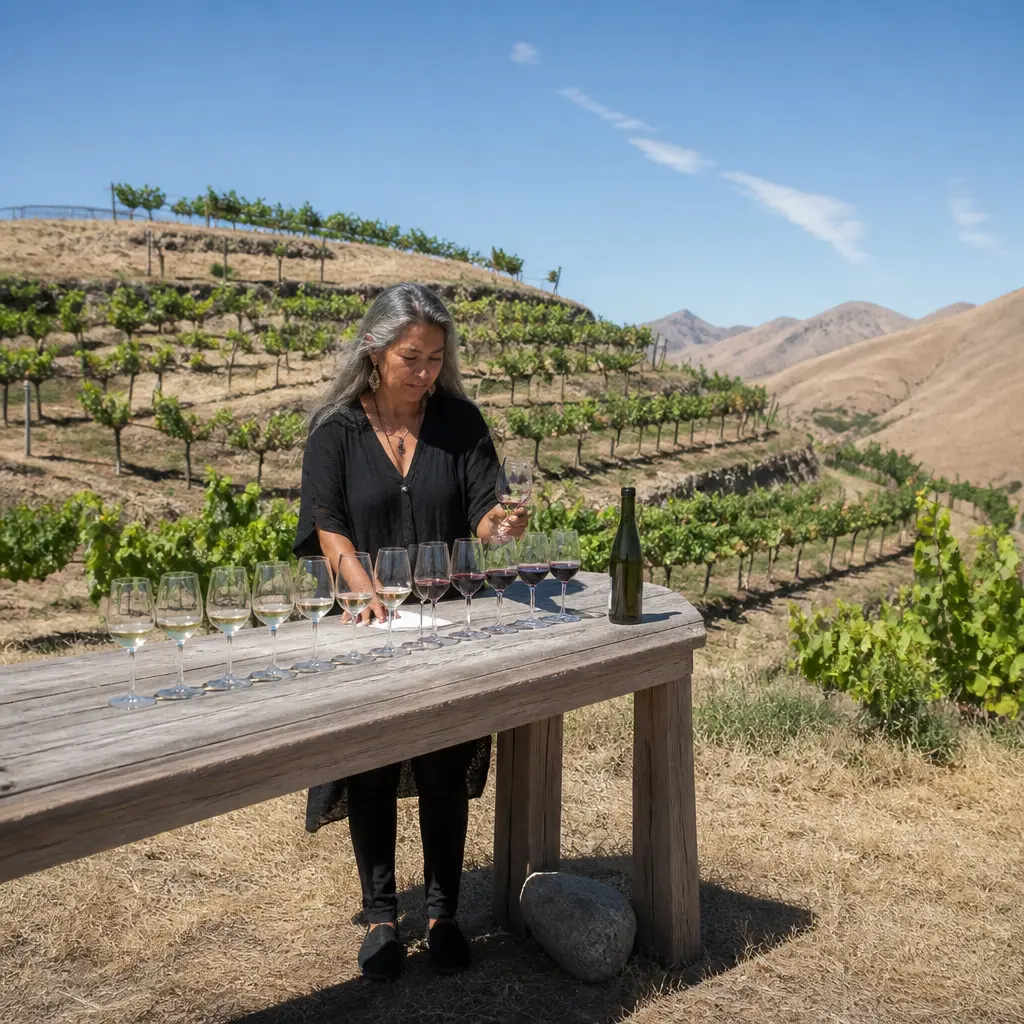
Terroir is the combined influence of climate, soil, topography, geology, vine material, and human practice on a wine’s identity. Balance and precision reveal that identity by allowing acidity, alcohol, tannin, sweetness, fruit, and aromatic detail to work as a coherent whole rather than as isolated features. The International Organisation of Vine and Wine describes terroir as a system linking environmental conditions with biological factors and human decisions, while the French National Institute of Origin and Quality emphasizes the interaction between a defined geographical area and its production practices. In practical terms, a balanced wine feels proportionate and complete; a precise wine communicates flavor, texture, and origin with clarity. Together, they help distinguish genuine site expression from the effects of excessive ripeness, oak, extraction, or winemaking intervention.
Revealing Wine Balance and Precision Through Terroir
Wine balance and precision are complementary attributes rather than strict legal categories. Balance describes the perceptual relationship among a wine’s structural elements, including acidity, alcohol, tannin, sweetness, body, fruit concentration, and oak. Precision describes the cleanness, definition, and persistence with which those elements express themselves. The Oxford Companion to Wine treats balance as a central criterion of quality, although it also recognizes that balance varies by style, grape variety, region, vintage, and individual expectation.
Terroir becomes most legible when winemaking supports rather than obscures these attributes. A cool-climate Riesling may show precision through high acidity, mineral tension, and restrained alcohol, while a warm-climate Syrah may express balance through ripe tannin, concentrated fruit, savory complexity, and sufficient acidity. Neither style is inherently more authentic. The relevant question is whether the wine’s components are proportionate and whether its sensory details correspond plausibly to its site.
Balance as Structural Proportion
Balance is the condition in which no single component dominates the tasting experience in a way that makes the wine feel disjointed. Acidity can refresh fruit and moderate alcohol; tannin can frame concentration; sweetness can soften acidity; and alcohol can contribute weight and warmth. A wine may be powerful, delicate, dry, sweet, low in alcohol, or high in alcohol and still be balanced if its elements support one another.
Analytical measurements help explain balance but cannot replace sensory judgment. Wine pH commonly falls approximately between 3.0 and 4.0, with lower pH generally contributing greater perceived freshness and microbial stability. Total acidity is often reported in grams per liter, while alcohol is expressed as a percentage by volume. These measurements describe the wine’s chemical framework, but the same numerical acidity can taste sharp in a thin wine and refreshing in a rich one. The American Society for Enology and Viticulture therefore treats sensory analysis and chemical analysis as related but distinct tools.
Precision as Sensory Definition
Precision means that aromas and flavors appear focused, recognizable, and free from distracting faults. It can involve the clarity of red-fruit aromas in Pinot Noir, the separation of citrus and floral notes in Riesling, or the fine-grained texture of tannin in Cabernet Sauvignon. Precision also includes the shape of the finish: a precise wine tends to leave a coherent aftertaste rather than a vague impression of sweetness, heat, bitterness, or oak.
Precision should not be confused with simplicity. A complex wine may contain many layers, but each layer remains identifiable and connected to the whole. Research from the University of California, Davis, and other sensory-science programs has shown that trained tasters can describe structured differences among wines, yet individual perception remains influenced by context, expectation, serving temperature, glassware, and food. Precision is therefore best evaluated through repeated tasting, blind comparison, and attention to persistence rather than through a single dramatic aroma.
Terroir as Environmental and Human Interaction
Terroir is broader than soil type. It includes temperature patterns, rainfall, sunlight, elevation, slope, drainage, wind, geology, vine age, rootstock, canopy management, harvest timing, fermentation, maturation, and local tradition. The International Organisation of Vine and Wine identifies this interaction as a combination of physical, biological, and human factors. Consequently, two vineyards with similar bedrock can produce different wines if their exposures, water availability, farming systems, or harvest decisions differ.
Climate is especially important because it influences sugar accumulation, acidity retention, phenolic ripeness, disease pressure, and harvest timing. The Intergovernmental Panel on Climate Change has documented rising global temperatures and changing precipitation patterns, while wine researchers such as Cornelis van Leeuwen have shown that climate strongly affects grape ripening and regional typicity. As vineyards warm, preserving balance may require altered canopy practices, drought-aware rootstocks, different picking dates, or the renewed consideration of varieties historically adapted to heat.
Connecting Wine Balance and Precision to Place
When balance and precision work together, they form a bridge between measurable composition and perceived origin. The bridge is not a simple fingerprint: no single molecule proves that a wine comes from one vineyard. Instead, place is expressed through recurring patterns of ripeness, acidity, tannin, aroma, texture, and finish across vintages and producers.
Acidity and Freshness as Site Signals
Acidity is a major carrier of freshness and line. Cooler nights, higher elevations, earlier harvests, and certain soil-water relationships can help grapes retain acidity, although variety and vintage remain decisive. In sparkling wine, high natural acidity supports longevity and tension. In still white wines, it can make fruit feel more defined and reduce the impression of alcohol or residual sugar.
A useful comparison is the contrast between Chablis and many warmer Chardonnay regions. Chablis traditionally emphasizes a leaner profile with citrus, mineral, and saline associations, while warmer areas may produce broader textures and riper fruit. The distinction is not created by “minerality” alone; it results from climate, harvest decisions, soil, fermentation, lees contact, and stylistic choices acting together.
Tannin, Texture, and Geological Context
Tannin contributes dryness, grip, bitterness, and length, particularly in red wine. Precision in tannin appears as firmness without harshness, while balance occurs when tannin matches the wine’s fruit concentration, acidity, alcohol, and intended aging period. Water availability, temperature, grape variety, seed and skin maturity, extraction method, and élevage all influence tannin.
Geology can affect drainage, rooting depth, mineral availability, and vine water status, but claims that a wine directly tastes of a specific rock require caution. The Geological Society and viticultural researchers generally support an indirect model: geology influences soil structure and water behavior, which influence vine growth and grape composition. This explanation is more scientifically defensible than treating soil minerals as simple flavor compounds transferred unchanged into wine.
Aroma, Persistence, and Regional Identity
Aromas can reveal both grape variety and production environment. Temperature, sunlight, water stress, fermentation yeast, sulfur compounds, oak, and bottle age all shape the final aromatic profile. Sauvignon Blanc from a cool maritime site may emphasize citrus, herbs, and restrained tropical fruit, whereas a warmer site may show riper melon or passion-fruit notes. Precision lies in the balance between varietal character and site-specific ripeness.
Persistence is another useful indicator. A long finish does not automatically mean quality, because bitterness, alcohol, or oak can create an artificial sense of duration. A terroir-driven finish is usually integrated: acidity carries the flavor, tannin provides structure, and aromatic compounds return after swallowing without distortion. Wine educators often use the terms length, persistence, and retronasal aroma to describe this phase of evaluation.
Testing Terroir Through Comparative Tasting
The most reliable way to examine terroir is comparative tasting under controlled conditions. A single bottle encourages broad storytelling, while a flight of wines exposes patterns. Compare the same grape from neighboring sites, the same vineyard across several vintages, or different producers working within one appellation. Keep serving temperature, glassware, bottle age, and tasting order consistent.
A Practical Evaluation Framework
- Assess the wine’s visual condition without treating color as a direct measure of quality.
- Identify aromatic clarity, intensity, freshness, and any signs of reduction, oxidation, volatile acidity, or excessive oak.
- Taste for acidity, sweetness, alcohol warmth, tannin, body, texture, and flavor concentration.
- Judge whether the structural elements reinforce one another or compete for attention.
- Evaluate the finish for persistence, coherence, and site-related character.
- Repeat the comparison blind when possible, then reveal the wines and discuss farming, vintage, and winemaking differences.
A simple chart can improve the exercise. Plot acidity, alcohol, tannin, aromatic intensity, and finish length on a five-point scale for each wine. The resulting radar chart will not prove terroir, but it can reveal whether a wine’s perceived identity comes from several coordinated traits or from one dominant feature such as oak, sweetness, or alcohol.
Case Study: Burgundy and the Logic of Site Comparison
Burgundy provides a classic example of terroir being evaluated through distinctions among sites, producers, and vintages. Wines made from Chardonnay or Pinot Noir can differ according to slope position, drainage, exposition, vineyard classification, élevage, and harvest conditions. The most convincing examples do not merely taste “more intense.” They show differences in acidity, texture, aromatic detail, tannin shape, and finish while retaining balance.
This case also demonstrates why precision is essential. If heavy new oak, excessive extraction, or overripe fruit dominates every bottle, the differences among parcels become harder to detect. Conversely, restrained winemaking can make small variations more apparent, although the producer’s choices never disappear completely. Terroir is therefore a dialogue between place and practice, not a purely natural imprint.
Protecting Balance and Precision in a Changing Wine World
The pursuit of balance and precision has practical significance beyond tasting language. Global wine production reached approximately 237 million hectoliters in 2023, according to the International Organisation of Vine and Wine, making wine an important agricultural, cultural, and economic system. At the same time, climate pressure, water scarcity, smoke exposure, disease, and market demand are challenging established regional styles.
Producers are responding with canopy shading, regenerative or conservation-oriented soil management, precision irrigation, alternative varieties, lower-alcohol techniques, and more adaptive harvest decisions. These measures can preserve freshness and phenolic maturity, but they must be evaluated against local identity. The goal is not to freeze terroir in the past; it is to maintain a coherent relationship between place, grape, farming, and wine.
For consumers, the best response is disciplined curiosity. Taste across regions and vintages, read technical sheets critically, distinguish measurable facts from marketing claims, and recognize that authenticity can include human adaptation. A balanced and precise wine does not need to be loud, rare, or expensive. Its value lies in how clearly it communicates its origin and how naturally its parts belong together.
Conclusion: Balance and Precision Make Terroir Legible
Wine balance is structural proportion, precision is sensory definition, and terroir is the environmental and human system that gives those qualities context. Acidity, tannin, alcohol, aroma, texture, and persistence become meaningful indicators of place when they are integrated rather than exaggerated. Comparative tasting, analytical data, and careful attention to climate and farming can validate impressions without reducing terroir to a single soil type or flavor claim.
As climate change and evolving production methods reshape vineyards, protecting true terroir will depend on preserving freshness, transparency, and regional coherence. Readers can explore the subject further by comparing wines from neighboring sites, studying vintage conditions, attending guided tastings, and consulting technical research alongside trusted regional sources. In every glass, balance and precision offer the clearest invitation to ask not only whether a wine is impressive, but what it reveals about where and how it was made.
Sources: International Organisation of Vine and Wine, OIV Report on the Worldwide Wine Production and Consumption, https://www.oiv.int/; International Organisation of Vine and Wine, OIV Statistics Database, https://www.oiv.int/what-we-do/statistics; Institut National de l’Origine et de la Qualité, Terroir and Appellation of Origin, https://www.inao.gouv.fr/; Oxford University Press, The Oxford Companion to Wine, 5th edition, https://www.oxfordreference.com/; Intergovernmental Panel on Climate Change, Climate Change 2023: Synthesis Report, https://www.ipcc.ch/report/ar6/syr/; van Leeuwen, Cornelis, and Philippe Darriet, “The Impact of Climate Change on Viticulture and Wine Quality,” Journal of Wine Economics, https://www.wine-economics.org/; American Society for Enology and Viticulture, Wine Chemistry and Sensory Evaluation Resources, https://www.asev.org/; Geological Society, Geology and Wine, https://www.geolsoc.org.uk/.