
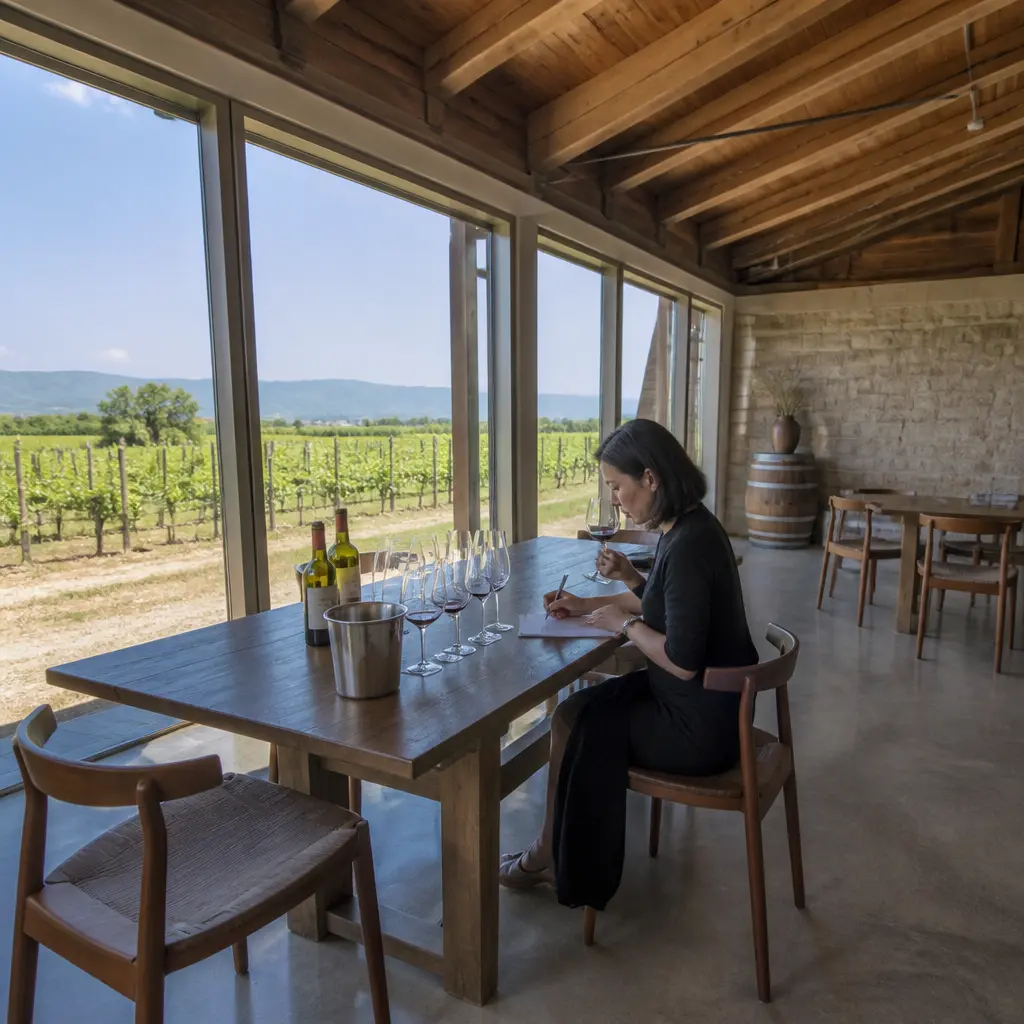
Grape tasting notes are structured descriptions of a wine’s appearance, aromas, flavors, texture, acidity, tannin, alcohol, and finish that help identify how a grape variety expresses itself. The most useful notes do more than label a wine “fruity” or “dry”: they connect sensory evidence with grape chemistry, climate, winemaking, and place. Learning to distinguish primary fruit from fermentation aromas, evaluate acidity and tannin, and compare recurring patterns across examples makes a grape’s character easier to recognize. This approach matters because wine quality and identity are judged through sensory perception, while the global vineyard area remains approximately 7.2 million hectares, according to the International Organisation of Vine and Wine, exposing drinkers to a vast range of varieties and styles.
Defining Grape Tasting Notes as a Tool for Variety Character
Grape tasting notes are organized sensory observations used to describe and evaluate wine. The Wine & Spirit Education Trust defines systematic tasting through categories such as appearance, nose, palate, and conclusions about quality, readiness, and identity. In practical terms, a tasting note translates sensations into repeatable language: citrus, black cherry, violet, pepper, wet stone, toast, vanilla, green herb, cream, or dried fruit.
The phrase “true character” does not mean that every bottle made from a grape tastes identical. It refers to the recurring sensory tendencies that remain visible across wines, such as Sauvignon Blanc’s usual high acidity and citrus-herbal profile or Nebbiolo’s combination of pale color, firm tannin, high acidity, and red-fruit and floral aromas. These tendencies are shaped by vineyard site, ripeness, yield, fermentation, oak, bottle age, and serving temperature.
Primary Character: Fruit, Flowers, Herbs, and Spices
Primary character consists of aromas and flavors that originate mainly from the grape and its development in the vineyard. Common hyponyms include fruit aromas, floral aromas, herbal aromas, spice aromas, and mineral-associated impressions. Fruit descriptors should be specific enough to communicate ripeness: green apple and lemon suggest a different profile from baked apple and lemon curd, while red currant differs from blackberry or prune.
A useful note identifies both aroma family and intensity. For example, “moderate red-cherry, raspberry, and violet aromas” provides more evidence than “fruity.” UC Davis research on grape and wine aroma chemistry shows that volatile compounds, including terpenes, norisoprenoids, and methoxypyrazines, contribute to recognizable sensory impressions. Methoxypyrazines are particularly associated with green pepper and herbaceous notes in varieties such as Cabernet Sauvignon and Sauvignon Blanc.
Structural Character: Acidity, Tannin, Alcohol, and Body
Structural character describes the physical sensations that give wine shape. Acidity creates freshness and salivation; tannin creates a drying, gripping sensation; alcohol contributes warmth and weight; and body describes the wine’s apparent fullness. These attributes are not flavor descriptors, but they often reveal a grape more reliably than a single fruit aroma.
Acidity is commonly discussed through pH and titratable acidity, although neither measurement completely predicts how a wine feels. Lower pH generally supports a sharper sensation and greater microbial stability, while higher acidity can make fruit seem brighter. Tannin is especially important in red varieties: Pinot Noir usually presents finer, lighter tannin than Cabernet Sauvignon, whereas Nebbiolo can combine notably high acidity with assertive, drying tannin. The WSET uses body, acidity, alcohol, tannin, and flavor intensity as core parts of structured evaluation.
Secondary and Tertiary Character: Fermentation, Oak, and Age
Secondary character develops during winemaking rather than directly in the grape. Its hyponyms include yeast-derived bread and pastry aromas, malolactic-butter aromas, lees-related creaminess, and oak-derived vanilla, cedar, smoke, or toast. These notes can complement a grape, but they can also obscure it when used heavily.
Tertiary character develops with maturation. Aged red wines may show leather, tobacco, dried flowers, mushroom, or dried fruit, while aged white wines may show honey, petrol, nuts, or toast. A tasting note that says “peach, lemon, and fresh herbs with high acidity” is more useful for learning a young grape’s identity than one dominated by “vanilla, coconut, and toast,” because oak aromas are production influences rather than variety-specific evidence.
Using Grape Tasting Notes to Separate Similar Varieties
The strongest tasting method compares grapes by several attributes at once. Aroma alone is vulnerable to expectation and serving conditions, whereas a profile combining aroma, structure, texture, and finish creates a more reliable sensory fingerprint. Professional tasting grids therefore encourage tasters to move from broad observations to specific conclusions.
Aroma Families and Intensity
Begin by identifying the dominant aroma family, then assess intensity and ripeness. A Chardonnay may show lemon, green apple, white peach, or tropical fruit, but its character changes substantially with climate and oak. Riesling often combines pronounced acidity with citrus, stone fruit, floral, and sometimes petrol-like notes as it ages. Cabernet Sauvignon may show blackcurrant, blackberry, cedar, graphite, mint, or green pepper, with the balance affected by climate and ripeness.
Aroma intensity should be recorded separately from aroma type. A wine can have high-intensity neutral fruit and low-intensity oak, or low-intensity fruit with prominent alcohol and tannin. This separation prevents a common error: mistaking a strong winemaking aroma for the grape’s essential identity.
Acidity and Tannin as Variety Clues
Acidity and tannin often narrow identification more effectively than fruit descriptors. Compare a light-bodied, high-acid, low-tannin red such as many Pinot Noirs with a full-bodied, high-tannin Cabernet Sauvignon. Compare also Grenache, which can offer ripe red fruit, relatively high alcohol, and softer tannin, with Sangiovese, which commonly shows sour cherry, noticeable acidity, and a savory, drying finish.
These comparisons should be treated as tendencies, not rules. Warm climates can increase sugar accumulation and alcohol while reducing perceived freshness; irrigation, harvest date, extraction, and whole-cluster fermentation can alter tannin and aroma. The same grape may therefore produce a lean, peppery wine in one region and a dense, ripe wine in another.
Finish, Balance, and Persistence
The finish is the flavor and structural sensation that remains after swallowing or spitting. Its hyponyms include short, medium, and long persistence; clean or bitter endings; and refreshing, warming, drying, or savory conclusions. A long finish is not automatically evidence of quality, but persistent, balanced flavor can indicate concentration and integration.
Balance describes the relationship among sweetness, acidity, alcohol, tannin, flavor intensity, and body. A sweet wine can remain fresh when acidity offsets sugar, and a powerful red can remain balanced when tannin and alcohol are integrated with fruit. Recording finish and balance helps distinguish a grape’s structure from its immediate aroma impact.
Applying Grape Tasting Notes in a Repeatable Practice
A repeatable tasting practice reduces bias and turns impressions into useful evidence. The objective is not to guess a grape immediately, but to collect observations before making an identification. The following sequence adapts the systematic approach used in wine education and sensory evaluation.
- Observe appearance, including color, depth, clarity, and viscosity.
- Smell the wine without agitation, then swirl and reassess aroma intensity and development.
- Record specific primary, secondary, and tertiary aromas rather than broad praise or criticism.
- Taste for sweetness, acidity, tannin, alcohol, body, flavor intensity, and texture.
- Describe the finish, balance, and any faults such as oxidation, cork taint, volatile acidity, or reduction.
- Compare the profile with reference wines from the same grape and different regions.
A Comparative Case Study: Sauvignon Blanc and Chardonnay
A side-by-side comparison illustrates how notes reveal character. A cool-climate Sauvignon Blanc may show lemon, grapefruit, fresh grass, and high acidity, often with a lean or medium body. A cool-climate Chardonnay may also show citrus and green apple, but it commonly has a rounder texture and less overtly herbal aroma. Fermented or aged in oak, Chardonnay may add toast, vanilla, or cream, while Sauvignon Blanc may show a more direct, pungent aromatic profile.
This comparison demonstrates why one descriptor is insufficient. Both varieties can smell citrusy, but acidity, texture, herbal intensity, oak influence, and finish create a more dependable distinction. A chart comparing aroma intensity, acidity, body, tannin, oak influence, and finish would make these differences visible without treating either variety as fixed.
Controlling Variables During Tasting
Temperature, glass shape, food, lighting, and personal expectation affect perception. Serve wines at appropriate temperatures, use clean neutral glasses, taste in consistent lighting, and conceal labels during comparative exercises. The American Society for Testing and Materials and sensory science programs commonly emphasize controlled conditions because environmental cues can influence scoring and identification.
Record the vintage, region, alcohol level, residual sugar when available, fermentation vessel, and oak treatment. These data explain why a wine may depart from a textbook profile. Repeating the exercise across at least three examples of a grape is more informative than relying on one bottle, particularly when comparing old-world and new-world styles.
Conclusion: Turning Tasting Notes into Grape Understanding
Grape tasting notes become meaningful when they connect primary character, structural character, and winemaking or aging influences. Specific aromas establish a starting point, while acidity, tannin, alcohol, body, finish, and balance provide the deeper evidence needed to recognize a variety. Comparing examples, controlling tasting conditions, and separating grape-derived traits from oak or fermentation aromas prevents simplistic conclusions.
The broader value of this method is practical: it helps consumers choose wines, supports students preparing for formal examinations, and gives producers a shared language for discussing style and quality. Begin with two contrasting varieties, taste them blind, write observations before reading the labels, and revisit the notes after learning the region and production details. Further study of the WSET systematic approach, UC Davis grape and wine chemistry, and OIV vineyard data can deepen the connection between sensory experience and evidence.
Sources: Wine & Spirit Education Trust, Systematic Approach to Tasting Wine, https://www.wsetglobal.com/knowledge-centre/wset-systematic-approach-to-tasting-wine/; International Organisation of Vine and Wine, State of the World Vine and Wine Sector in 2023, https://www.oiv.int/what-we-do/statistics; University of California, Davis, Department of Viticulture and Enology, Grape and Wine Aroma Research, https://wineserver.ucdavis.edu/industry-info/enology; American Society for Testing and Materials, ASTM E300 Practice for Sampling Industrial Chemicals, https://www.astm.org/e0300-03r14.html