
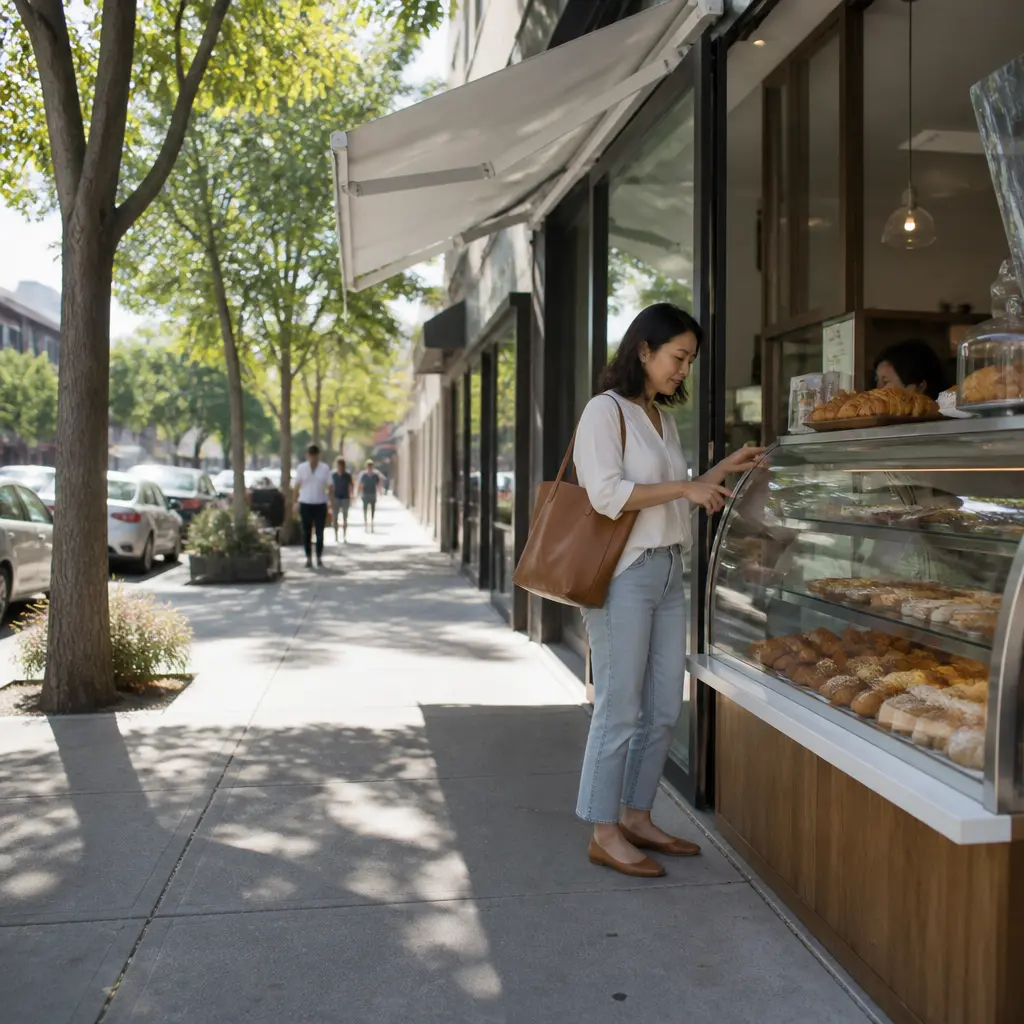
A neighborhood gourmet gem is a distinctive, high-quality restaurant, bakery, café, market, or food stall located close enough to become part of residents’ everyday routines. Its quiet joy comes from discovering exceptional cooking without a long journey: a seasonal menu around the corner, a family-run trattoria on a familiar street, or a small bakery whose regulars know the best hour for warm bread. This form of local dining matters because proximity encourages repeat visits, supports independent businesses, strengthens neighborhood identity, and makes food discovery more accessible. The U.S. Bureau of Labor Statistics reported that American consumer units spent an average of $3,933 on food away from home in 2023, while the National Restaurant Association projected restaurant and foodservice sales would exceed $1 trillion in 2024, showing how central dining out is to household life and the wider economy.
Proximity Defines the Neighborhood Gourmet Gem
A neighborhood gourmet gem can be defined as a nearby food establishment whose quality, character, and relationship with its community make it unusually rewarding relative to its size or visibility. The term is not a formal legal or culinary classification. Instead, it combines three attributes: geographic closeness, memorable food, and local significance. Restaurant historian and author Jane Kramer has frequently emphasized the cultural importance of ordinary places where food, conversation, and community overlap; in that sense, a gourmet gem is valued not only for technical execution but also for the experience it creates in a particular place.
The pairing of neighborhood and gourmet is important because it challenges the assumption that fine food must involve luxury surroundings, famous chefs, or extensive travel. A gem may be a refined tasting-menu restaurant, but it may just as plausibly be an excellent dumpling counter, an independent coffee roaster, a regional sandwich shop, or a produce-focused market. The Michelin Guide’s Bib Gourmand category illustrates this broader idea by recognizing establishments that offer good food at good value rather than reserving attention exclusively for formal fine dining.
The Nearby Bistro or Trattoria
A nearby bistro or trattoria is a small, often informal restaurant built around a focused menu, approachable hospitality, and repeat local customers. Its gourmet quality may appear in handmade pasta, carefully sourced seafood, house-made sauces, or a short wine list selected with precision. These businesses benefit from what urban researchers call walkable access: the ability to reach daily needs on foot or by a short trip. The National Association of City Transportation Officials identifies shorter distances and active street life as important features of people-oriented neighborhoods, conditions that make spontaneous dining discoveries more likely.
The Independent Bakery, Café, or Specialty Shop
A bakery, café, cheese shop, or specialty grocer becomes a gourmet gem when craftsmanship and consistency turn an everyday purchase into a small ritual. These places often reveal their quality through details: laminated pastry layers, properly extracted espresso, fresh milling, fermented dough, or knowledgeable recommendations. Their appeal is especially powerful because the cost and time commitment can be modest. A customer may discover the business through a morning walk, then gradually become a regular who recognizes the baker, learns the weekly specials, and notices changes in the harvest or menu.
The Hidden Counter or Food Stall
A hidden counter or food stall is a compact operation whose limited seating and narrow menu concentrate attention on a few specialties. It may be located inside a market, beside a grocery store, or in a converted storefront. Hyponyms include noodle counters, taco stands, bao shops, juice bars, and charcoal-grilled skewer stalls. Their small scale can support experimentation and speed, while customer feedback is immediate and personal. The National Restaurant Association has repeatedly identified convenience, value, and distinctive experiences as major forces shaping restaurant demand, all of which help explain the popularity of focused neighborhood counters.
Quality Makes the Neighborhood Gourmet Gem Memorable
Proximity may prompt the first visit, but quality creates the habit. In a neighborhood gourmet gem, quality is multidimensional: flavor, freshness, preparation, hospitality, atmosphere, reliability, and value work together. A technically excellent dish is not enough if service is consistently dismissive or prices are unclear. Conversely, a modest room can feel extraordinary when the cooking is confident, the staff is attentive, and the experience feels honest.
Craftsmanship and Menu Focus
Craftsmanship means that ingredients and methods are handled deliberately rather than merely marketed as premium. A concise menu can be a useful signal because it allows a small kitchen to purchase more carefully, reduce waste, and repeat dishes until they are dependable. The James Beard Foundation’s restaurant awards and journalism frequently draw attention to regional ingredients, cultural traditions, and the people behind the food, reinforcing the idea that excellence includes technique as well as context.
Value and the Pleasure of Repeat Visits
Value does not necessarily mean the lowest price. It means that the quality, portion, hospitality, and sense of occasion feel proportionate to the cost. Repeat visits are a practical measure of this balance. A restaurant that becomes part of a weekly routine demonstrates a different kind of success from a destination restaurant visited once for a special event. The BLS Consumer Expenditure Surveys show the substantial role of food-away-from-home spending in household budgets, making perceived value especially relevant as diners decide where to return.
Atmosphere and Recognition
Atmosphere is the combination of sound, lighting, seating, pace, cleanliness, and social character that shapes how food is remembered. In a neighborhood gem, recognition adds another layer: the barista remembers a preferred drink, the owner asks about a returning customer’s family, or the chef explains a seasonal ingredient. This familiarity should remain welcoming rather than exclusive. The result is a form of hospitality in which a customer feels both cared for and connected to the surrounding community.
Discovery Turns Local Dining into a Shared Experience
The discovery of a neighborhood gourmet gem often begins with a small clue: a line outside a quiet storefront, an enticing smell during an evening walk, a recommendation from a nearby shopkeeper, or a photograph shared by a friend. Digital platforms can accelerate this process, but personal observation remains important because online popularity does not always capture a restaurant’s local rhythm. The most useful approach combines reviews with firsthand attention to menus, opening hours, sourcing statements, and the behavior of returning customers.
A Practical Discovery Method
- Begin with a short walking or transit radius and list independent restaurants, bakeries, markets, and counters.
- Look for a focused menu, visible preparation, seasonal changes, or clear evidence of specialized skill.
- Visit at a quieter time so there is room to observe service and ask informed questions.
- Order a signature item and one simple item, then compare consistency, freshness, and value.
- Return before forming a final judgment, since a small business may vary by day, staffing, or seasonal supply.
A Simple Neighborhood Scorecard
A useful scorecard can track five measures: walking convenience, food quality, hospitality, value, and desire to return. A reader could plot each measure on a five-point scale in a simple radar chart, with the center representing a weak result and the outer edge representing an exceptional one. The chart is not a substitute for judgment, but it helps separate a memorable meal from a place that is merely fashionable. It also makes clear why a gem can score highly without being luxurious: strong hospitality and repeat value may compensate for limited décor or a small dining room.
The Community Effect
Independent food businesses contribute more than meals. They create gathering points, provide employment, preserve culinary traditions, and keep commercial streets active. The USDA’s research on local food systems has documented the economic role of direct-to-consumer channels such as farmers markets, farm stands, and community-supported agriculture. Restaurants and specialty shops extend that local-food network by turning regional products and cultural knowledge into accessible experiences. When residents spend locally and offer constructive feedback, they help sustain the conditions that allow distinctive businesses to remain open.
The Quiet Joy of Returning to a Neighborhood Gourmet Gem
The deepest pleasure of a neighborhood gourmet gem is not the thrill of novelty alone. It is the gradual transformation of discovery into belonging. A first visit may be motivated by curiosity, but later visits carry memory: the pastry shared after a difficult morning, the bowl of soup ordered on a rainy evening, or the table where a friend’s news was celebrated. These experiences illustrate why local dining has cultural value beyond consumption.
A neighborhood gourmet gem combines proximity, craftsmanship, value, and recognition. Its hyponyms range from bistros and trattorias to bakeries, specialty shops, and hidden counters, yet each can fulfill the same role: making excellent food part of ordinary life. With food-away-from-home spending representing a major household category and restaurant sales supporting millions of jobs, choosing such places can also be an economic and civic decision. Readers can begin by exploring one nearby block, asking thoughtful questions, trying a house specialty, and returning often enough to notice the people and practices behind the plate.
Sources: U.S. Bureau of Labor Statistics, Consumer Expenditure Surveys, 2023, https://www.bls.gov/cex/; National Restaurant Association, 2024 State of the Restaurant Industry Report, https://restaurant.org/research-and-media/research/research-reports/state-of-the-restaurant-industry/; Michelin Guide, Bib Gourmand Selection, https://guide.michelin.com/us/en/article/michelin-guide-ceremony/bib-gourmand; National Association of City Transportation Officials, Urban Street Design Guide, https://nacto.org/publication/urban-street-design-guide/; James Beard Foundation, Restaurant and Chef Awards, https://www.jamesbeard.org/awards; U.S. Department of Agriculture Economic Research Service, Local Food Systems, https://www.ers.usda.gov/topics/food-markets-prices/local-foods/.